
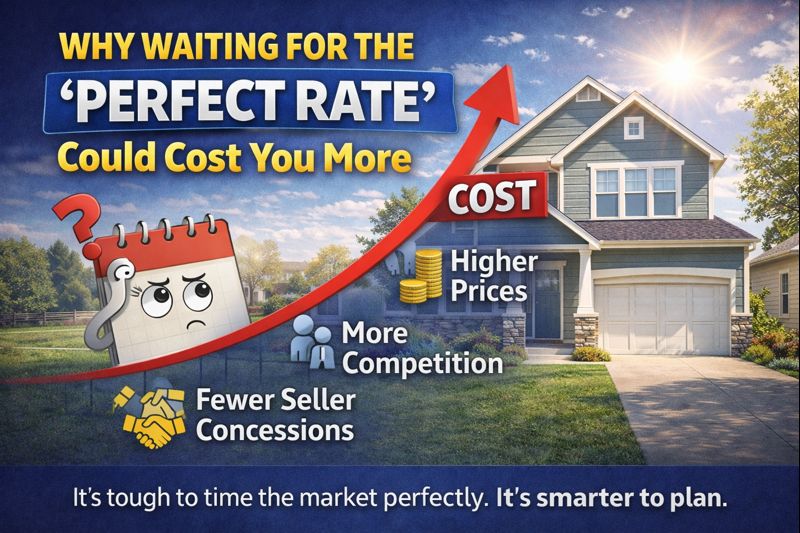
Why Waiting for the “Perfect Rate” Could Cost You More
If you’ve been thinking about buying a home, chances are you’ve said (or thought) something like this:
“I’m just going to wait until rates come down a little more.”
On the surface, that sounds reasonable. After all, a lower rate means a lower payment, right?
Sometimes yes.
But sometimes waiting for the “perfect” rate can actually cost more in the long run.
Here’s why.
The Problem With Waiting for Certainty
The housing market rarely offers perfect conditions across the board. When rates improve, other parts of the market usually change too.
As rates drop:
- More buyers re-enter the market
- Competition increases
- Home prices often rise
- Sellers become less flexible
The moment borrowing becomes cheaper, demand tends to follow.
Waiting for certainty often means waiting until everyone else feels confident too.
Opportunity Cost: The Part Most Buyers Miss
Opportunity cost is what you give up by waiting.
In real estate, that can include:
- Paying rent instead of building equity
- Missing out on price negotiations or seller concessions
- Buying at a higher purchase price later, even with a lower rate
A slightly lower interest rate doesn’t always offset a higher home price or more competitive offers.
A Simple Example
Let’s say two buyers are looking at similar homes.
Buyer A buys now:
- Purchase price: $400,000
- Rate: slightly higher
- Negotiates seller concessions and avoids bidding wars
Buyer B waits:
- Rates drop modestly
- Purchase price rises to $430,000 due to increased demand
- Fewer concessions, more competition
Even with a better rate, Buyer B may end up with:
- A higher loan balance
- A similar or higher monthly payment
- Less flexibility overall
The rate improved, but the total cost went up.
You Can Refinance a Rate — You Can’t Rewind the Purchase Price
One of the most overlooked facts in home buying is this:
You can refinance a mortgage rate later.
You cannot refinance the price you paid for the home.
Buyers who purchase when competition is lower often have more room to negotiate, more options, and more control over the transaction.
That flexibility has real value.
Waiting Can Also Mean Missing Lifestyle Goals
Buying a home isn’t just a math problem. It’s also about timing in your life.
Waiting another year or two might mean:
- Delaying stability
- Postponing a move that fits your family better
- Staying in a rental longer than planned
For many buyers, the cost of waiting isn’t just financial.
The Smarter Approach: Planning Instead of Timing
Trying to time the market perfectly is nearly impossible. Planning, on the other hand, is very doable.
That means:
- Getting pre-approved so you’re ready
- Understanding your payment comfort zone
- Exploring strategies like seller concessions or future refinances
- Making decisions based on numbers, not headlines
At BrightSide Lending, we help buyers think through the full picture so they can move forward confidently, whether that’s now or later.
Final Thoughts
Waiting for the “perfect” rate often feels safe, but it can quietly work against you.
The better question isn’t “What if rates drop more?”
It’s “What am I giving up by waiting?”
If you’re considering buying and want an honest, pressure-free conversation about your options, BrightSide Lending is here to help you plan smartly and move when it makes sense for you.


