
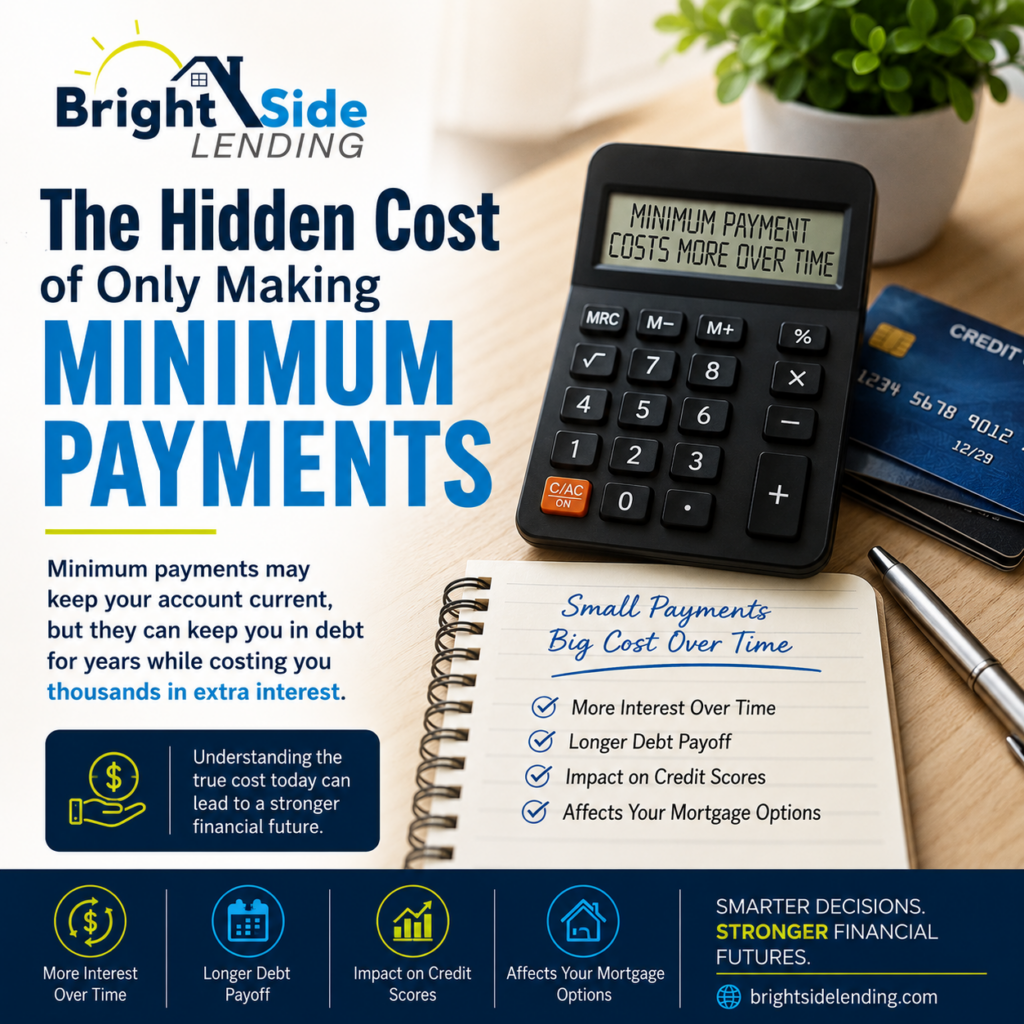
The Hidden Cost of Only Making Minimum Payments
Many consumers assume that making the minimum payment on a credit card means they are responsibly managing their debt.
Technically, the account may remain current, but what many people do not realize is how expensive minimum payments can become over time.
In some situations, making only the minimum payment can keep someone in debt for years while costing thousands in additional interest.
Why Minimum Payments Can Become So Expensive
Most credit card minimum payments are structured primarily to keep the account current while collecting interest over a long period of time.
That means a large portion of the payment may go toward:
- interest
- fees
- very little actual principal reduction
As a result, balances often decrease much slower than people expect.
A Real-World Example
Let’s say someone has:
- a $15,000 credit card balance
- an interest rate around 24%
- and only makes the minimum payment each month
At first, the minimum payment may seem manageable.
However, because interest continues compounding monthly, it could potentially take many years to fully pay off the balance while costing thousands in interest along the way.
In some situations, consumers may ultimately repay far more than the original amount charged.
How This Can Impact Homeownership
High revolving debt can also affect mortgage qualification and buying power.
Large credit card balances may:
- increase debt-to-income ratios
- lower credit scores
- reduce borrowing capacity
- impact monthly affordability
Even consumers with strong income sometimes underestimate how much revolving debt can affect mortgage options.
Why Some People Feel Stuck
One of the biggest challenges with minimum payments is that they can create the illusion of financial progress while balances remain relatively unchanged for long periods of time.
As interest continues accumulating, many consumers feel like they are working hard financially but not truly moving forward.
Comparing Other Financial Strategies
Depending on the situation, some consumers explore alternatives such as:
- accelerated payoff plans
- debt consolidation
- balance transfer strategies
- refinance options
- home equity solutions
Every financial situation is different, and what makes sense for one person may not make sense for another.
The important thing is understanding the long-term cost of debt before allowing balances to continue compounding over time.
Final Thoughts
Minimum payments may help keep accounts current, but they can also become extremely expensive over the long term if balances remain high.
Understanding how interest compounds, how long repayment can take, and how debt impacts overall financial flexibility can help consumers make more informed financial decisions.
Looking beyond the minimum payment is often one of the most important steps toward improving long-term financial health.


