
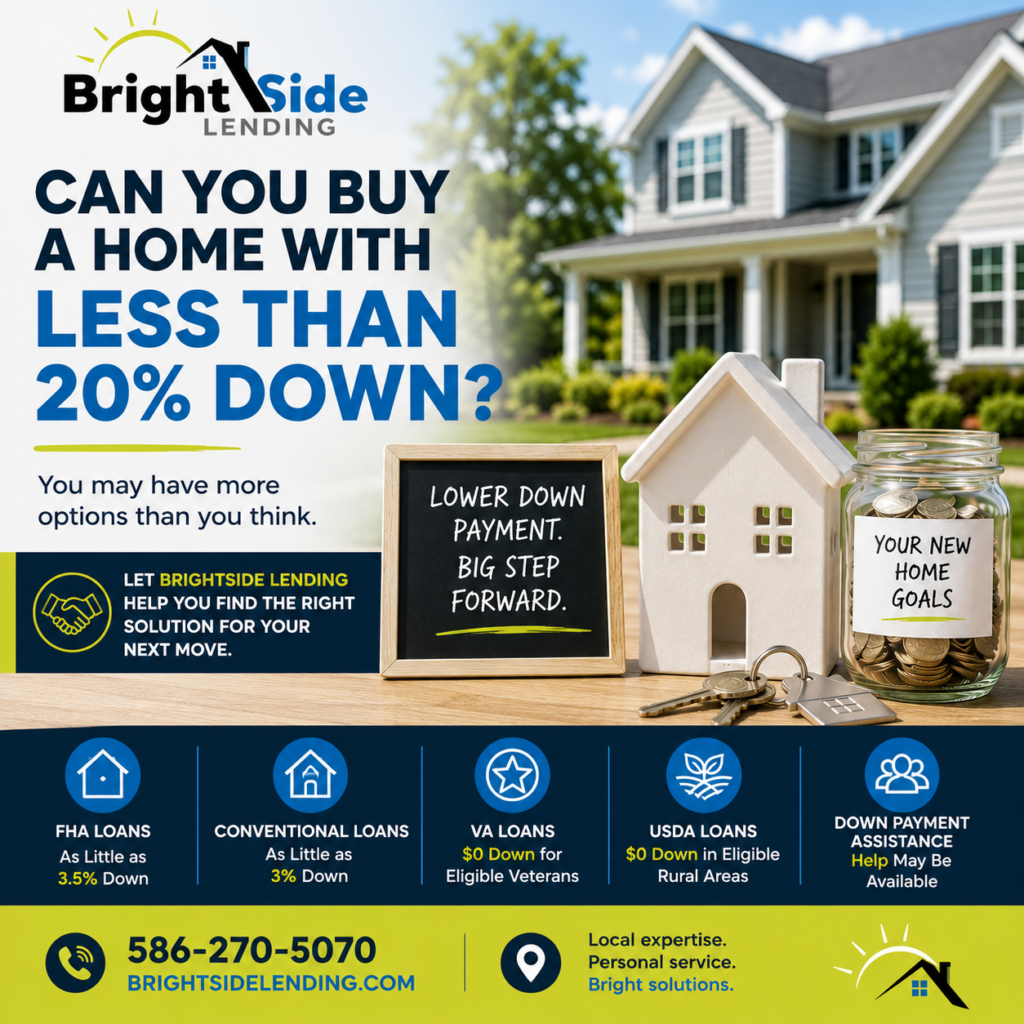
Can You Buy a Home With Less Than 20% Down?
One of the most common questions I get asked is whether you need a 20% down payment to buy a home.
The truth is that many buyers can qualify for a mortgage with significantly less than 20% down. In fact, some loan programs allow eligible buyers to purchase a home with little or even no down payment at all.
If you’ve been putting off homeownership because you think you need tens of thousands of dollars saved, it may be worth exploring your options sooner than you think.
Why Do People Think They Need 20% Down?
Historically, a 20% down payment was often considered the ideal target because it allows borrowers to avoid private mortgage insurance (PMI) on conventional loans.
While avoiding PMI can be beneficial, it doesn’t mean you must wait until you’ve saved 20% to become a homeowner.
Many buyers choose to purchase with a smaller down payment so they can begin building equity sooner rather than spending years trying to save a larger amount.
FHA Loans: As Little as 3.5% Down
FHA loans remain one of the most popular options for first-time homebuyers.
Qualified borrowers may purchase a home with as little as 3.5% down, making homeownership more accessible for many buyers.
FHA loans can also be more flexible regarding credit history and debt-to-income ratios than some conventional financing options.
Learn more about FHA financing:
https://www.brightsidelending.com/loan-options/fha-loans/
Conventional Loans: As Little as 3% Down
Many buyers are surprised to learn that conventional financing may require far less than 20% down.
Certain conventional loan programs allow qualified borrowers to purchase a primary residence with as little as 3% down.
Conventional loans often provide competitive rates and flexible terms for borrowers with strong credit profiles.
Learn more about conventional financing:
https://www.brightsidelending.com/loan-options/conventional-loans/
VA Loans: Zero Down for Eligible Veterans
Eligible veterans and active-duty service members may qualify for a VA loan, which often requires no down payment.
VA loans continue to be one of the most powerful home financing tools available, offering competitive rates and flexible qualification standards for eligible borrowers.
Learn more about VA loans:
https://www.brightsidelending.com/loan-options/va-loans/
USDA Loans: Zero Down in Eligible Areas
USDA loans are another option that may allow qualified borrowers to purchase a home with no down payment.
These loans are designed to encourage homeownership in eligible rural and suburban areas and can be an excellent fit for buyers who meet income and property requirements.
Learn more about USDA financing:
https://www.brightsidelending.com/loan-options/usda-loan/
Don’t Forget About Down Payment Assistance
Many buyers are unaware that local, state, and national down payment assistance programs may be available.
These programs can help eligible borrowers cover part of their down payment and closing costs, making homeownership more attainable.
Learn more about down payment assistance:
https://www.brightsidelending.com/loan-options/down-payment-assistance/
How Much Should You Put Down?
The right down payment amount depends on your individual goals, finances, and loan program.
In some cases, putting more money down may reduce your monthly payment. In others, it may make more sense to keep additional cash available for emergencies, home improvements, moving expenses, or future investments.
Every situation is different.
Final Thoughts
After nearly two decades in the mortgage industry, I’ve found that many people wait longer than necessary because they assume they need a 20% down payment.
The reality is that many qualified buyers can purchase a home with far less money out of pocket than they expected.
If you’re wondering how much you may need to buy a home, it’s often worth having a conversation before spending years trying to save a down payment that may not actually be required.
BrightSide Lending can help you review your options and determine which loan program best fits your goals and financial situation.
Ready to explore your options? Contact BrightSide Lending today to discuss your home financing opportunities.


